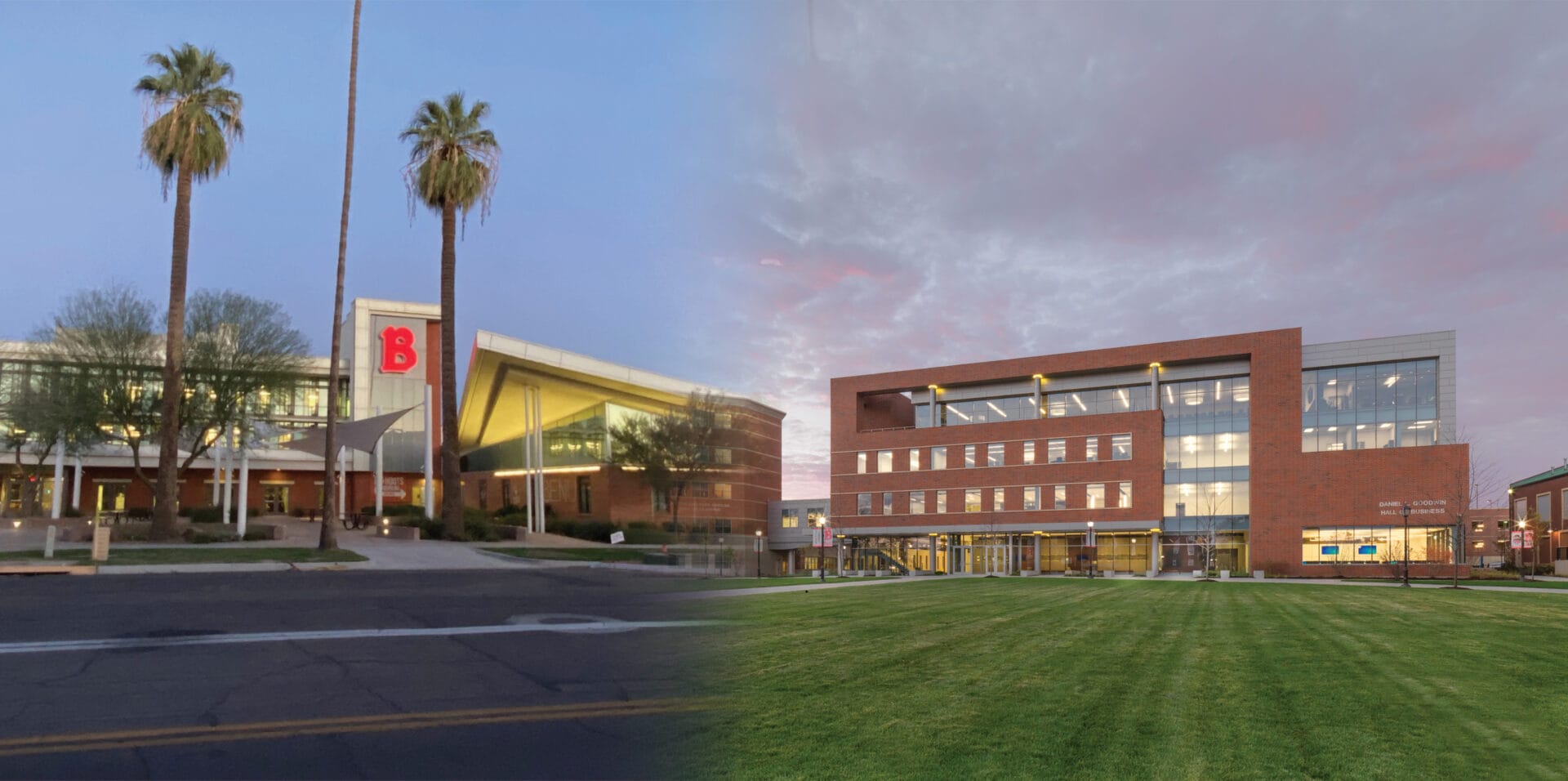
Benedictine University’s (BenU) Daniel L. Goodwin Hall of Business buzzed with intellectual energy on Thursday, April 16, as students from across disciplines gathered for the annual Undergraduate Research, Scholarship, and Arts (URSA) Symposium.
Established in 2011, URSA was created to expand opportunities for undergraduates to lead or collaborate on research projects alongside faculty mentors. Now in its fifteenth year, the event has grown into a cornerstone of BenU’s academic calendar, and the 2026 symposium proved to be one of the most vibrant yet.
From noon-4:30 p.m., Goodwin Hall hosted a packed schedule of oral presentations across three rooms (211, 212, and 213) with three concurrent time blocks running from noon until the late afternoon. Topics ranged from police perceptions of community-oriented policing and the role of music in Native American identity to existentialist analyses of eating disorders, echo chambers on social media, CAR-T cell therapy for solid tumors, and the racialized lens of medical illustration. The presentations reminded all in attendance that URSA interprets “scholarship” in the broadest possible sense.
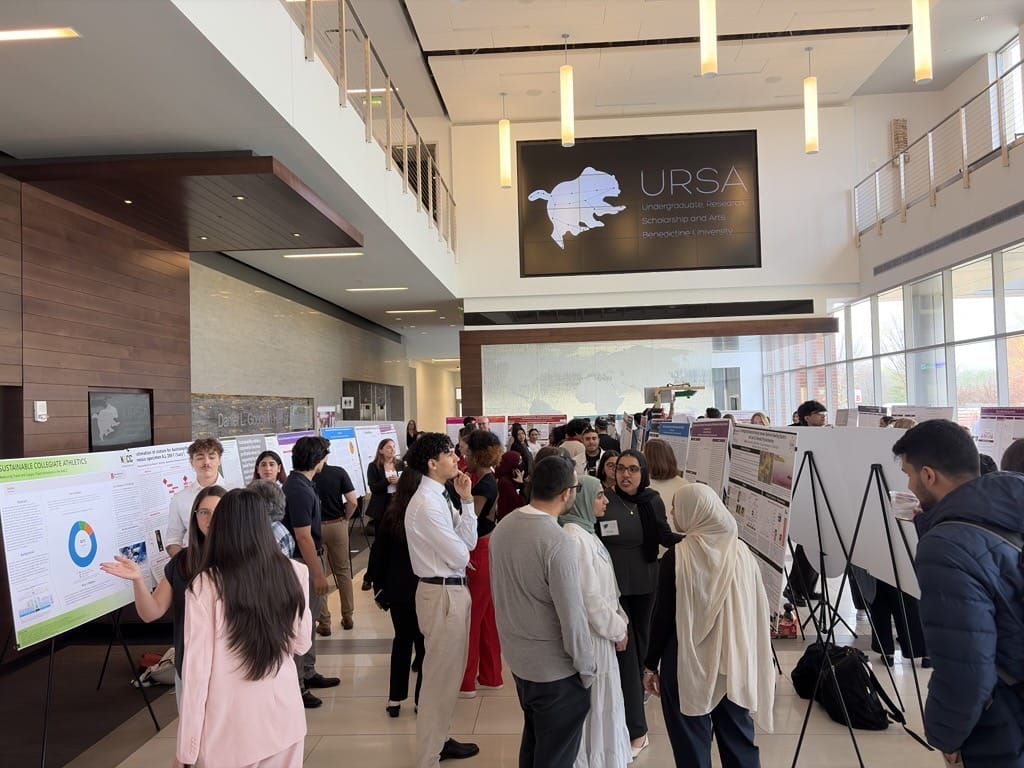
Meanwhile, the first-floor lobby transformed into a bustling gallery of discovery during the poster session held from 12:30-2:30 p.m. Poster topics ranged from Wolbachia bacteria in arthropods and the neurotoxic effects of microplastics on the brain to AI-driven goose deterrent systems for Lake St. Benedict, the relationship between personality traits and social deduction games, and a winter clothing drive supporting survivors of domestic violence.
Students from the natural sciences presented research findings on large-format posters, while peers from the humanities and arts displayed original creative work, including visual art installations and descriptions of original musical compositions.
Faculty, staff, and students filled the hallways and session rooms, offering thoughtful questions and enthusiastic support. For many presenters, URSA served as a vital “dry-run” for larger regional conferences later this spring. But for all involved, the event was a celebration of what happens when BenU students are given a stage to share their curiosity.